James McKevitt
Space Instruments Engineer, UCL Mullard Space Science Laboratory
Associated Researcher, Institute of Astrophysics, University of Vienna
Space Instruments Engineer, UCL Mullard Space Science Laboratory
Associated Researcher, Institute of Astrophysics, University of Vienna
Loading…
Loading…

Magnetic reconnection rapidly releases stored magnetic energy in solar flares and many other plasmas, linking processes across many orders of magnitude in scale. This project uses new observational and computational capabilities to determine how large-scale plasma dynamics drive reconnection in the solar atmosphere.

Associated project with Austrian Scientific Computing (ASC) providing €105,000 of MUSICA compute time and 2,700,000 core hours on the Vienna Scientific Cluster (VSC-5 and VSC-4).
Project manager for the University of Vienna's Star and Planet Formation group project on the Vienna Scientific Clusters 4 and 5, 2026–present.

Administrator for the project supporting simulations of the SOLAR-C mission and the short-wavelength camera being built at UCL MSSL, 2026–2030.
For the latest projects and activity, visit my GitHub profile: github.com/jamesmckevitt.
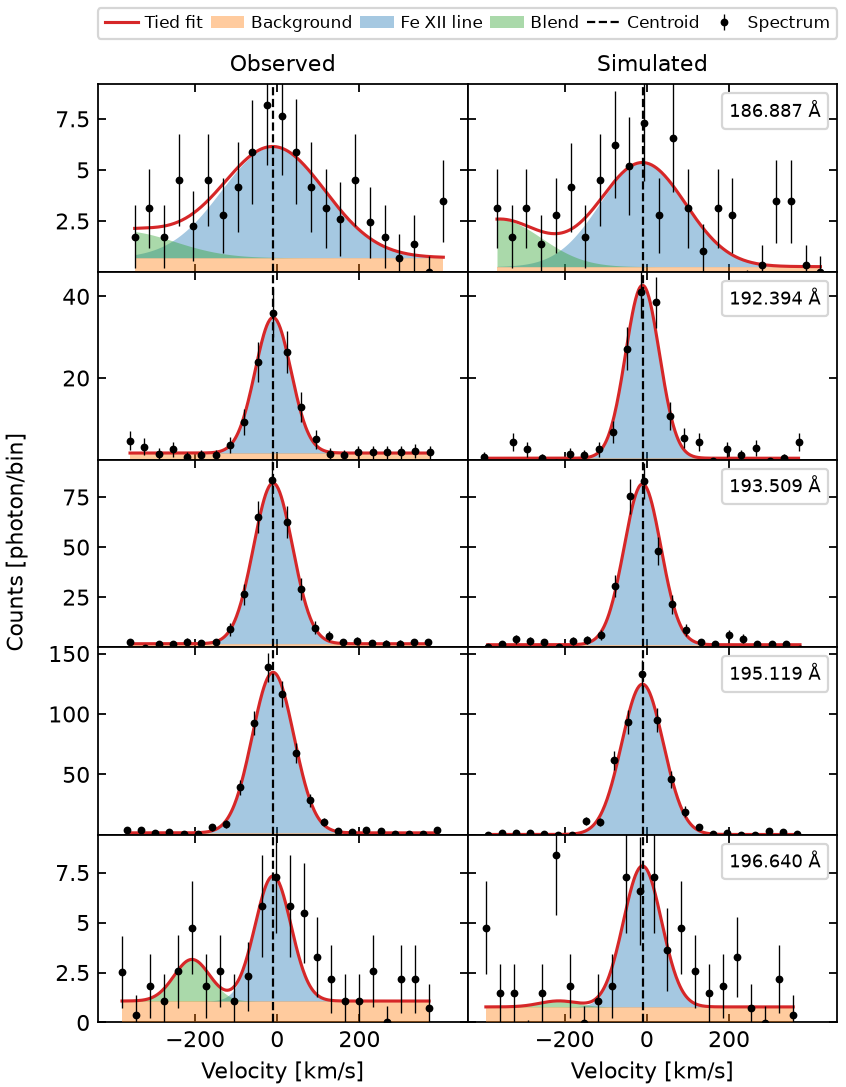
tiedfit fits the Doppler velocity of several emission lines of one ion together, with one shared velocity, which measures it more precisely than the best single line. It works on any slit spectrograph data given as arrays of wavelength, counts and uncertainties, and can read Hinode/EIS files.
Emission Calculation and Line Prediction for SOLAR-C EUVST
The ECLIPSE code is used to forward model the performance of the EUV spectrograph EUVST onboard the SOLAR-C spacecraft.
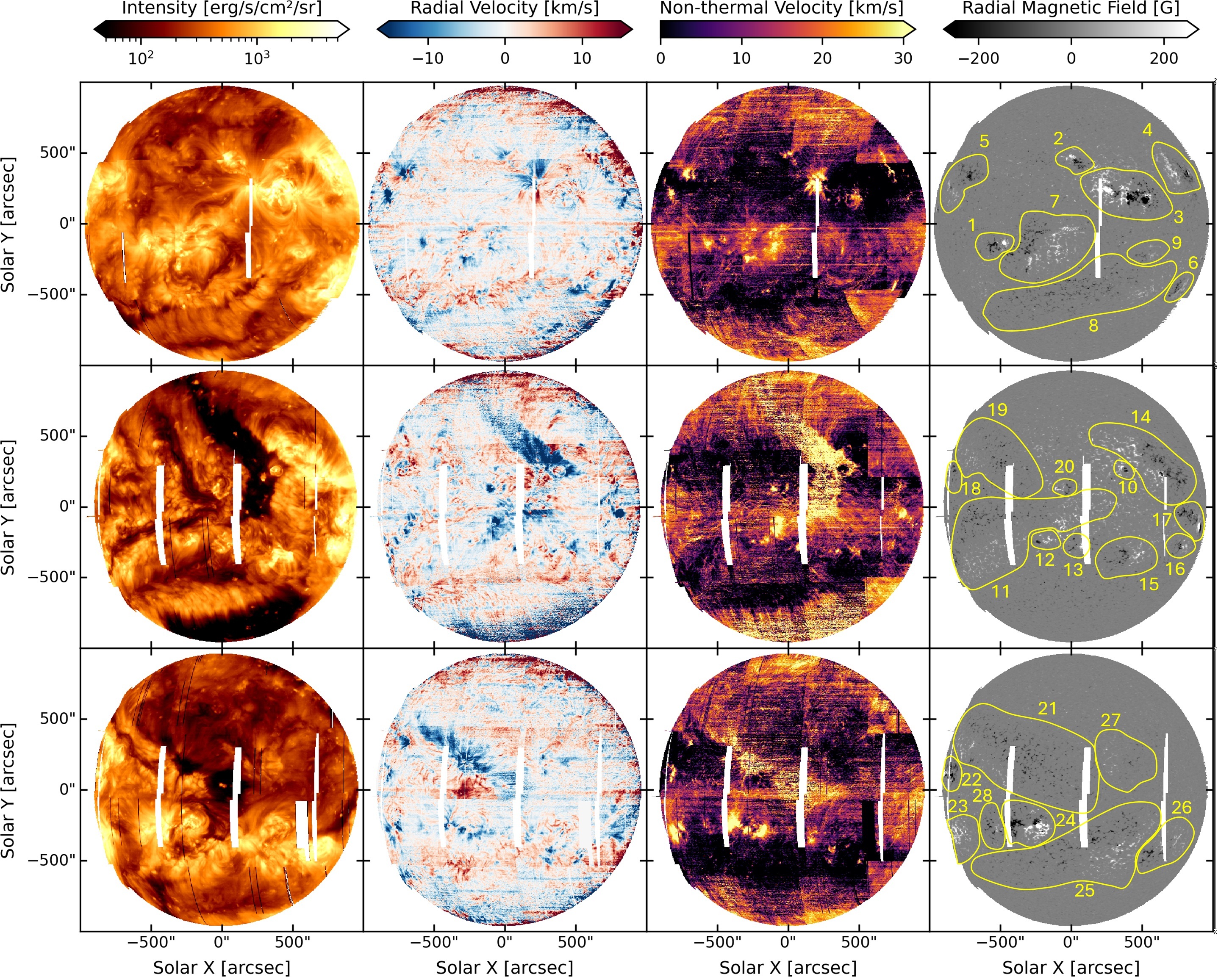
EISMaps is a Python package for processing data from the EIS (Extreme-ultraviolet Imaging Spectrometer) instrument on the Hinode spacecraft. It assembles Hinode/EIS slit full-disk maps with various options. It also provides useful wrapping functionality to the fantastic eispac code for batch processing of large EIS datasets.
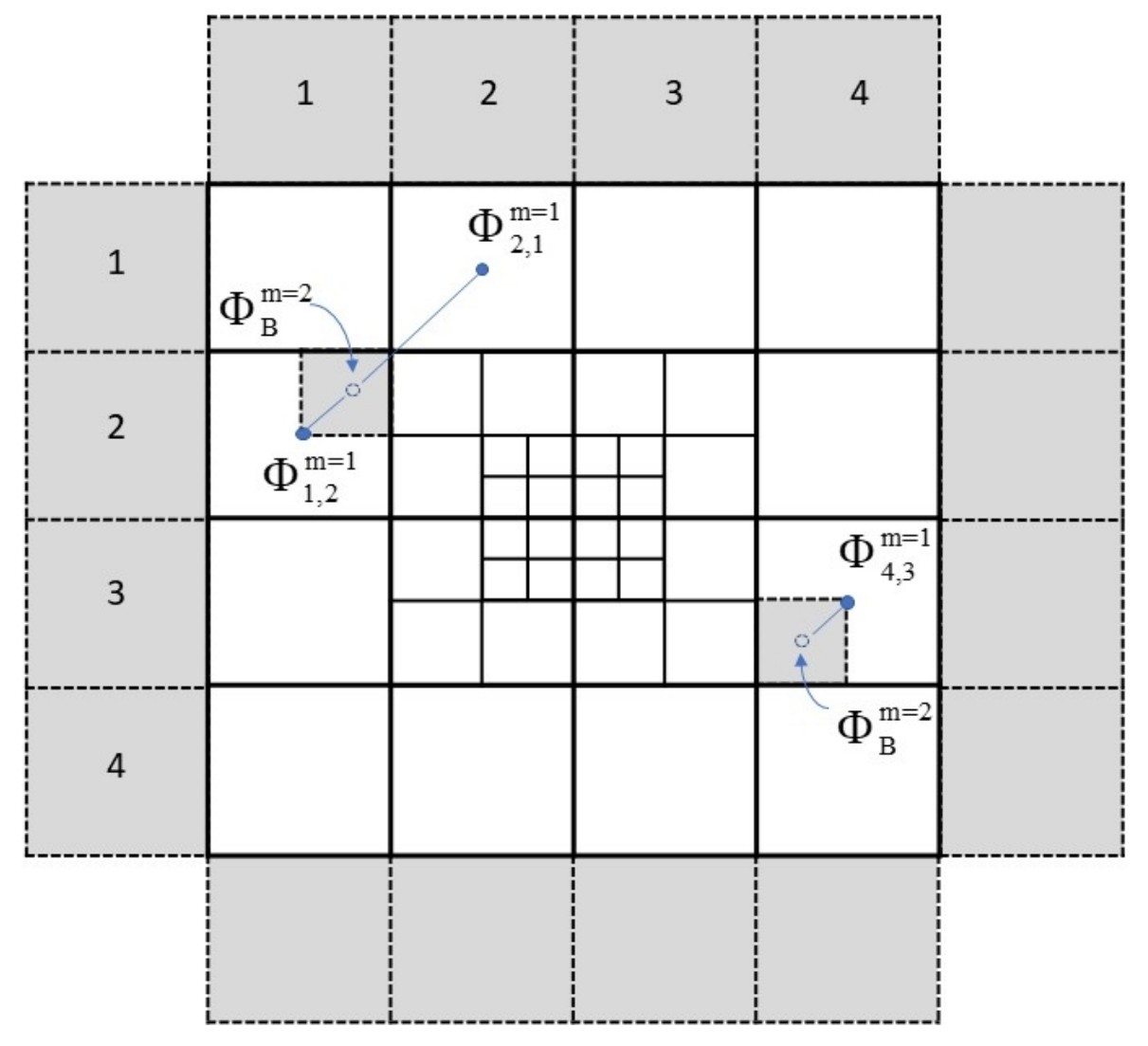
This code computes the gravitational potential on nested meshes using the convolution theorem. The method is thoroughly described in Vorobyov, E.I., McKevitt, J. et al. (2023) 'Computing the gravitational potential on nested meshes using the convolution method', Astronomy & Astrophysics, 671(A81). DOI: 10.1051/0004-6361/202244701.
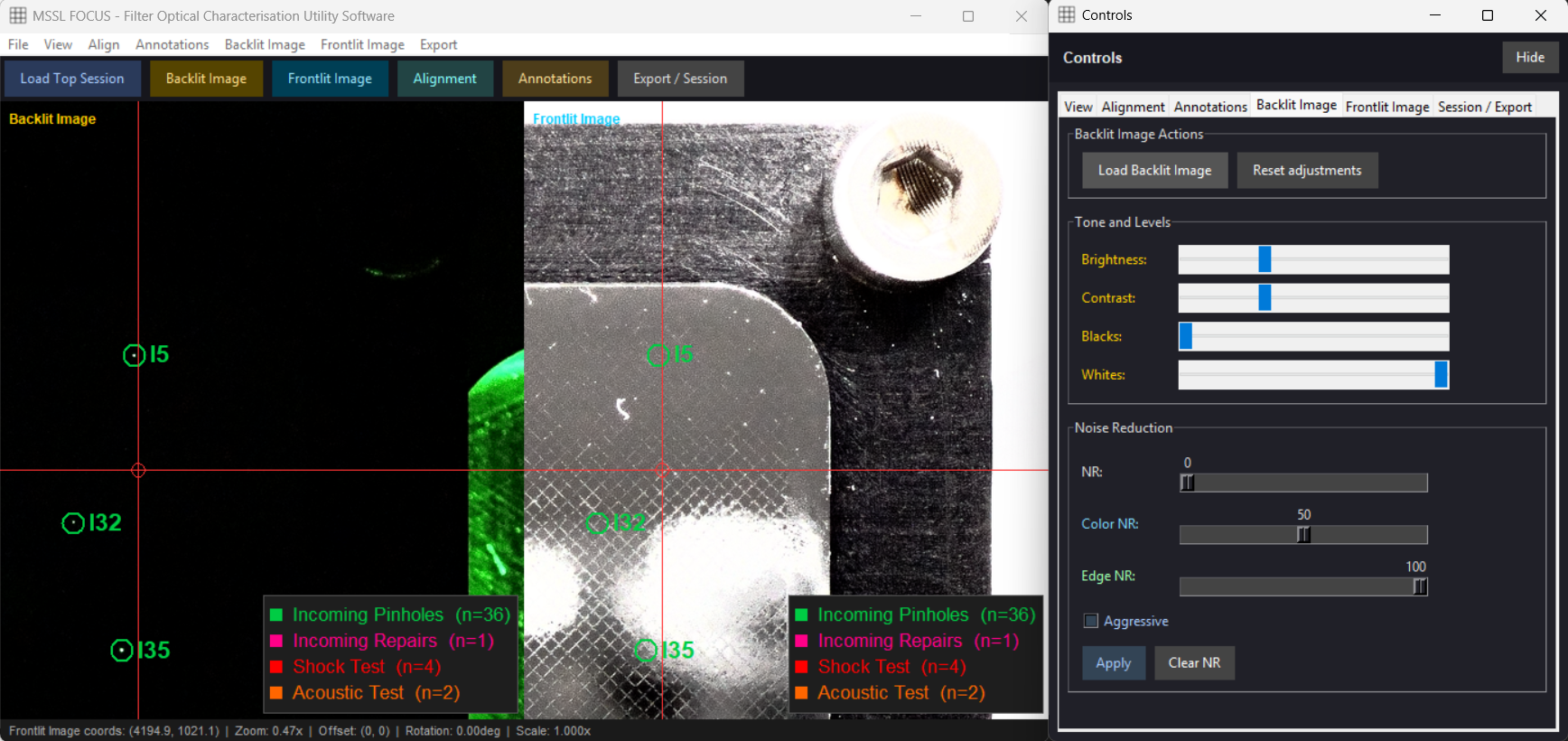
Filter Optical Characterisation Utility Software
MSSL FOCUS is a desktop tool for comparing and annotating pairs of thin-film optical filter images side-by-side or as a blended overlay. It provides alignment, annotation, image adjustment, and crop export tools, and was developed to support filter inspection activities at the UCL Mullard Space Science Laboratory.
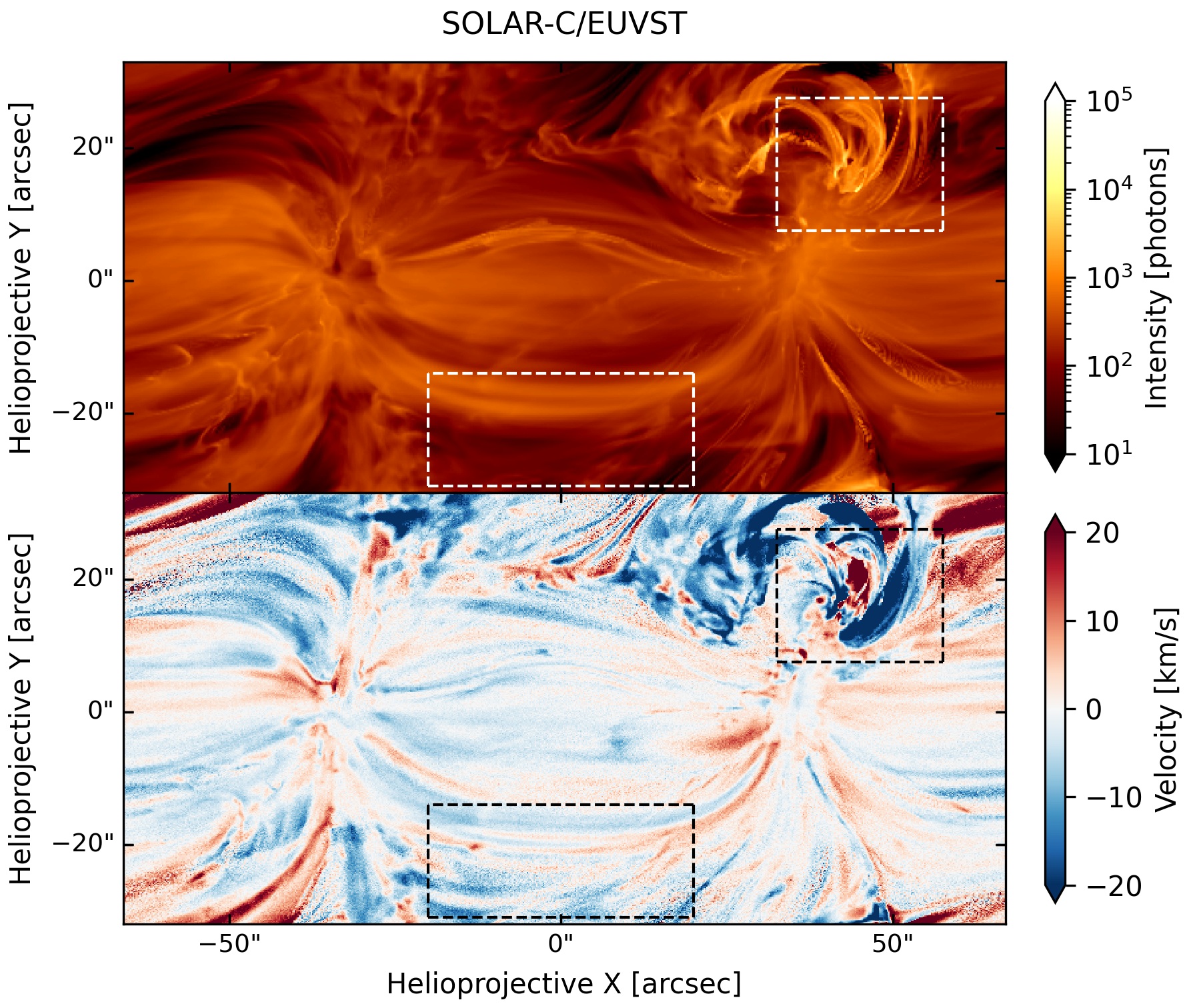
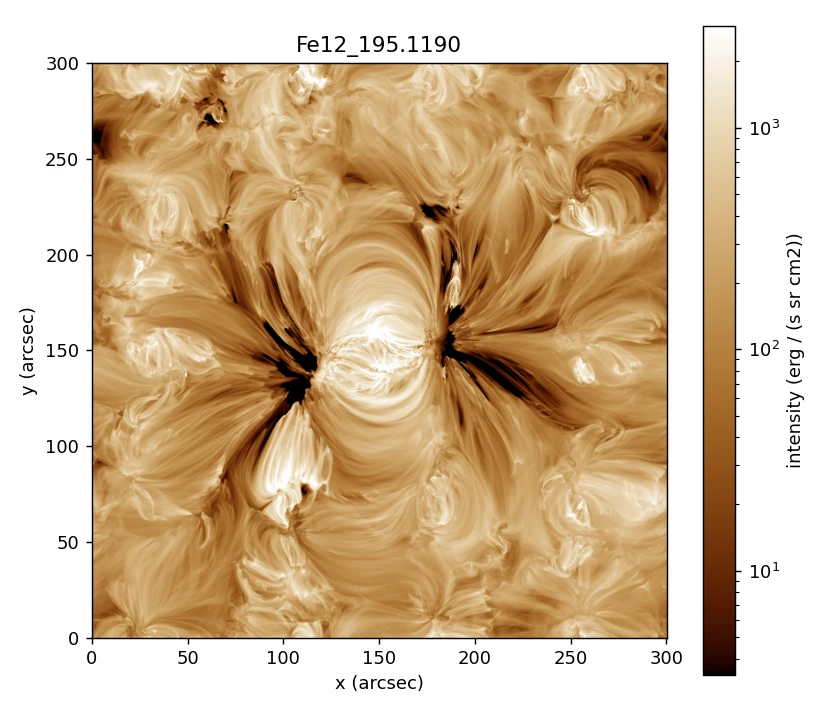
A three-dimensional radiative magnetohydrodynamic simulation of a bipolar active region embedded in the quiet Sun, made with the MURaM code. The box is 300 × 300 arcsec wide. The data are one snapshot of the simulation, released to test forward modelling for the EUV High-throughput Spectroscopic Telescope (EUVST) on SOLAR-C.
Test release, not for scientific use. It is for developing and testing software, data pipelines and instrument simulators. An improved version is in preparation.
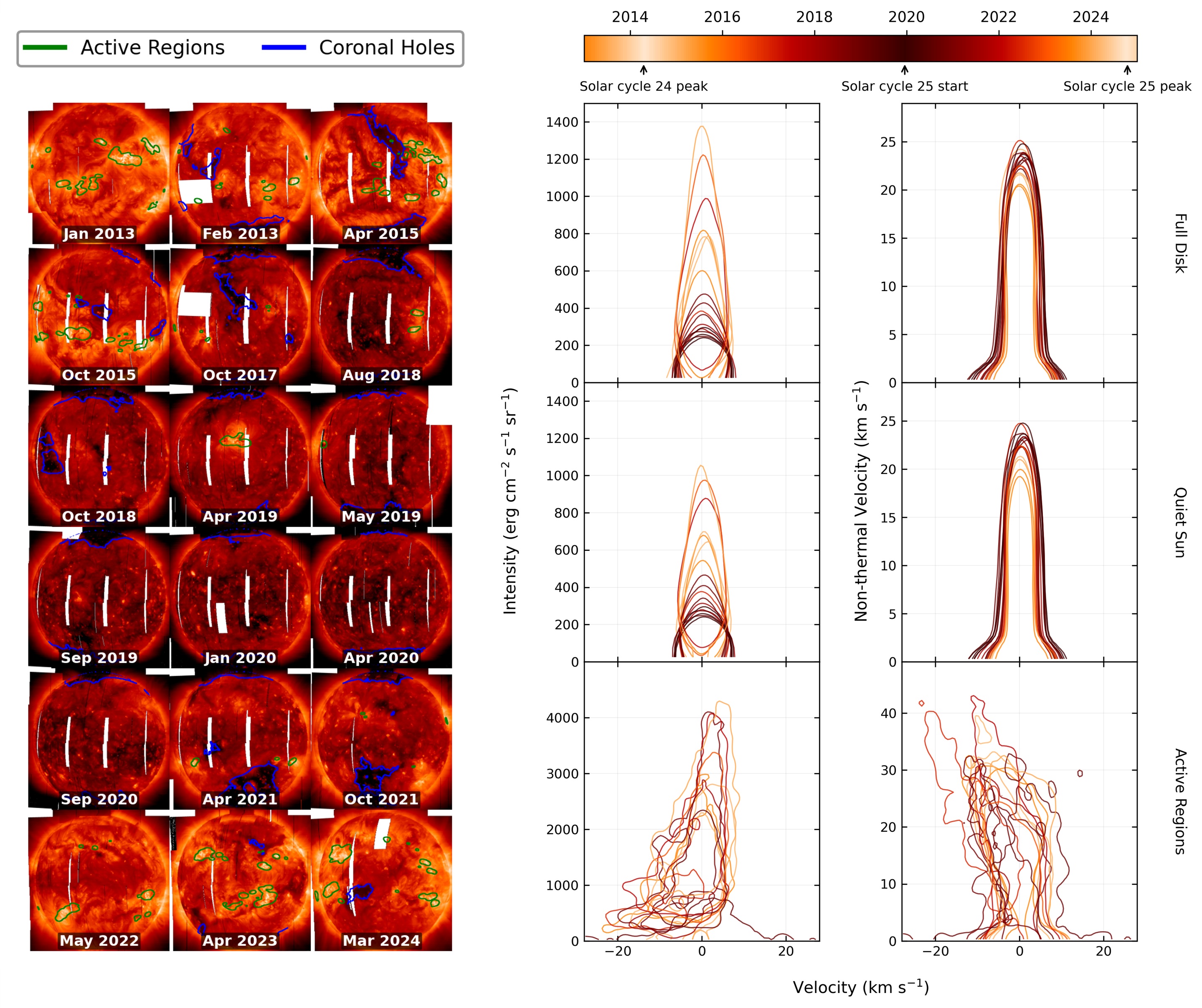
This dataset contains 22 full-disk spectroscopic mosaics made by Hinode/EIS between 2013 and 2026, processed to level 3. For each emission line there is one FITS file per quantity, all on the same grid: intensity, Doppler velocity, line width and non-thermal velocity, along with their uncertainties and maps of fit quality, number of rasters and observation time. The scans used the widest 2-arcsec slit, stepped 4 arcsec between exposures (6 arcsec for one scan), so each spectrally resolved pixel is typically 4 arcsec (X) × 1 arcsec (Y). Intensities use the time-dependent radiometric calibration of Del Zanna et al. (2025).
Loading…